The ones who tremble at the thought of ordering it IV…
And the ones who prescribed without a blink.
Which camp do you belong to?
Because when Delirious Dani starts wielding her plastic breakfast knife like it’s a katana, flinging juice cups like grenades, and trying to leave the ward via the window(we’re 6 stories up), “conservative management" starts feeling a little… optimistic.
Insert Haloperidol.
The delirium saviour. Taking Delirious Dani back to Just Dani in no time at all. Great!
But Haloperidol has a problem– ⚠️WARNING “QT prolongation. Risk of sudden cardiac death.”
That’s enough to make even seasoned geriatricians double back. No one wants sudden cardiac death. Yes, QT prolongation is well documented. But are we actually sure about that risk of cardiac death?
These Canadian researchers were not. Warnings about major adverse cardiac events (MACE), were based on lower-quality evidence such as case reports. They wanted to step it up and run it by the mother-of-all-academia… a meta-analysis.
Published in PLOS ONE, this meta-analysis aimed to summarise high-quality evidence on the frequency and nature of MACE’s associated with haloperidol compared to placebo.
Method:
They included 84 Randomised Control Trials, including 12,180 participants.
They only included studies focused on adults(>18 years) comparing haloperidol(IV, IM or PO) to placebo or active comparator.
The patient population included Psychiatric, delirium/dementia, critical care, surgical, neurologic, substance use.
Primary outcome measure was a composite of MACE’s, including all-cause mortality, cardiac arrest, ventricular arrhythmias, seizure, and syncope
And what did they find?:
Out of more than 1,100 MACE events, nearly all (97.8%) were deaths. But crucially, there was no statistically significant increase in risk with haloperidol compared to placebo.
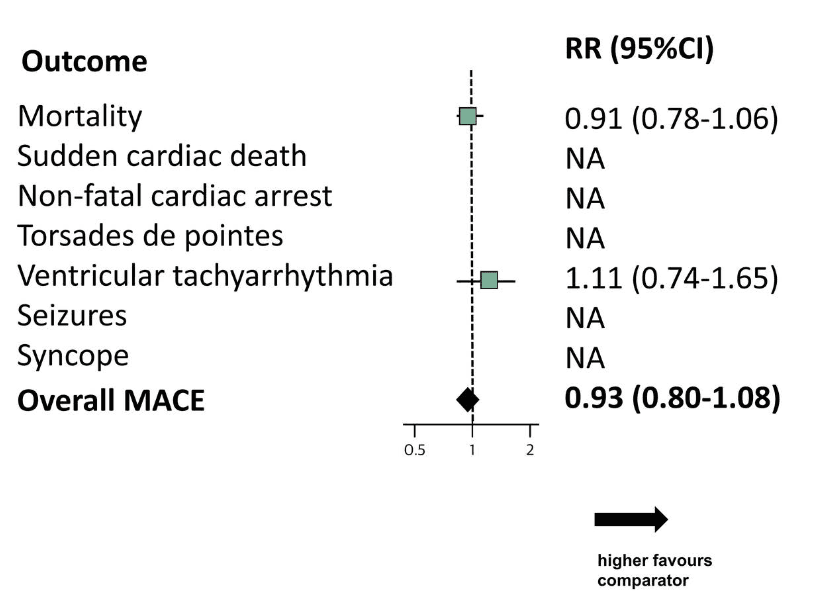
MACE risk ratio: 0.93 (95% CI: 0.80–1.08)
Mortality risk ratio: 0.91 (95% CI: 0.78–1.06)
IV haloperidol mortality risk: No increase (RR 0.88, 95% CI: 0.72–1.08)
Torsades? There were two cases. And both were in a critical care trial where the patients hadn’t even received haloperidol in the four days leading up to the arrhythmia. So, not exactly an open-and-shut case for cardiac doom.
So what does this mean?
Well, it means haloperidol isn’t the death sentence some EMR alerts make it out to be. It means that in a well-monitored, appropriately dosed setting, the risk of major cardiac events is (statistically speaking) not actually elevated. And it means that when Delirious Dani is on the loose, you might not need to hesitate so much.
When it comes to haloperidol, there are only two types of doctors in this world.
Maybe now, we all know which one we should be.