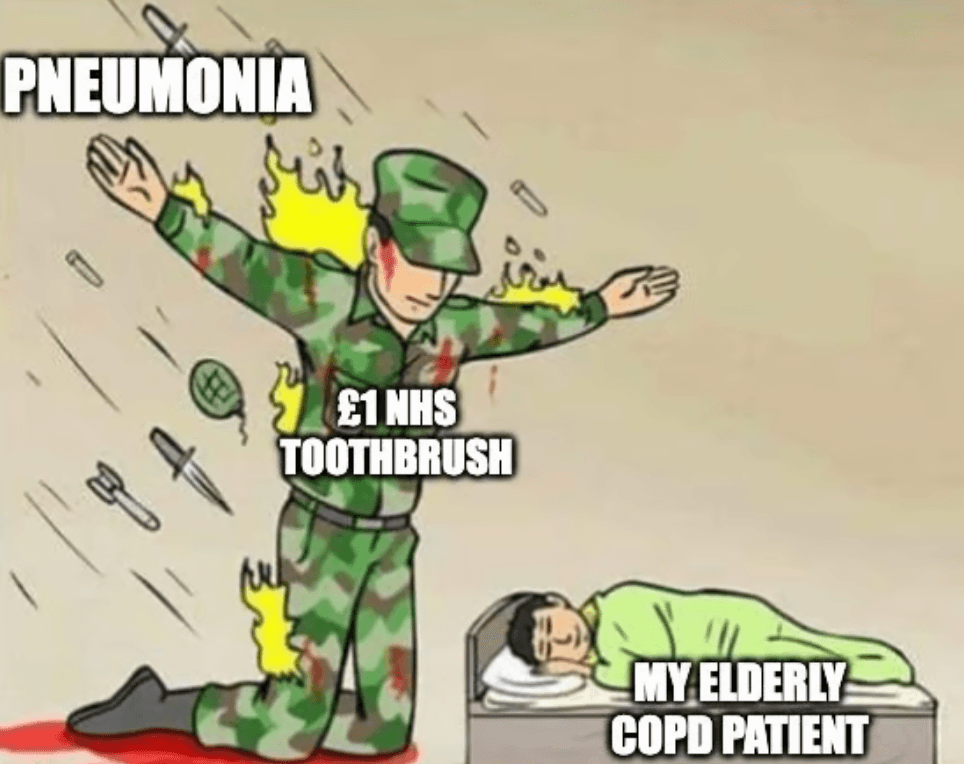
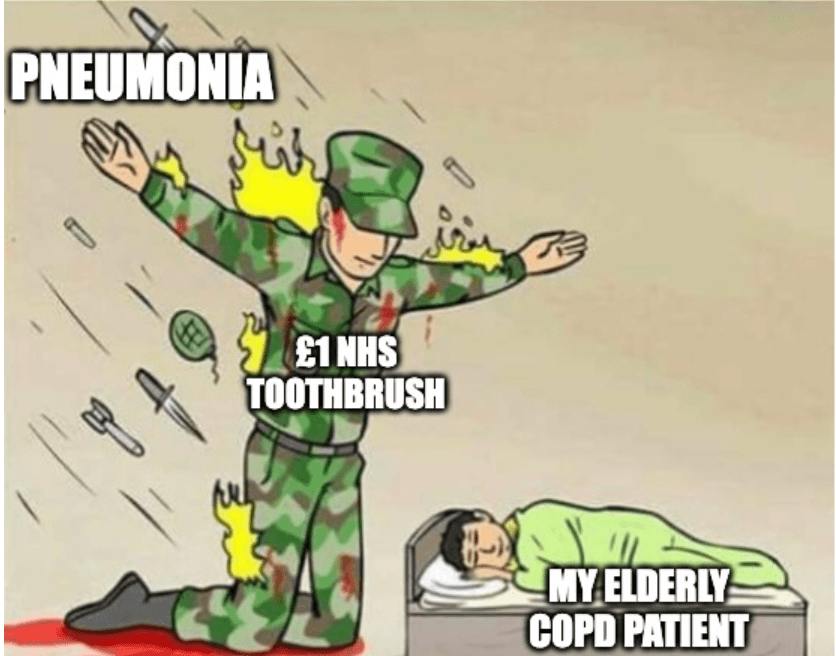
The humble toothbrush.
Fighting the daily battle against tooth decay, gum disease, and the dreaded bad breath.
You might brush once a day or twice a day. You might do it before breakfast or after breakfast (FYI, before is actually better). You might even actually FLOSS alongside brushing. You performative freak.
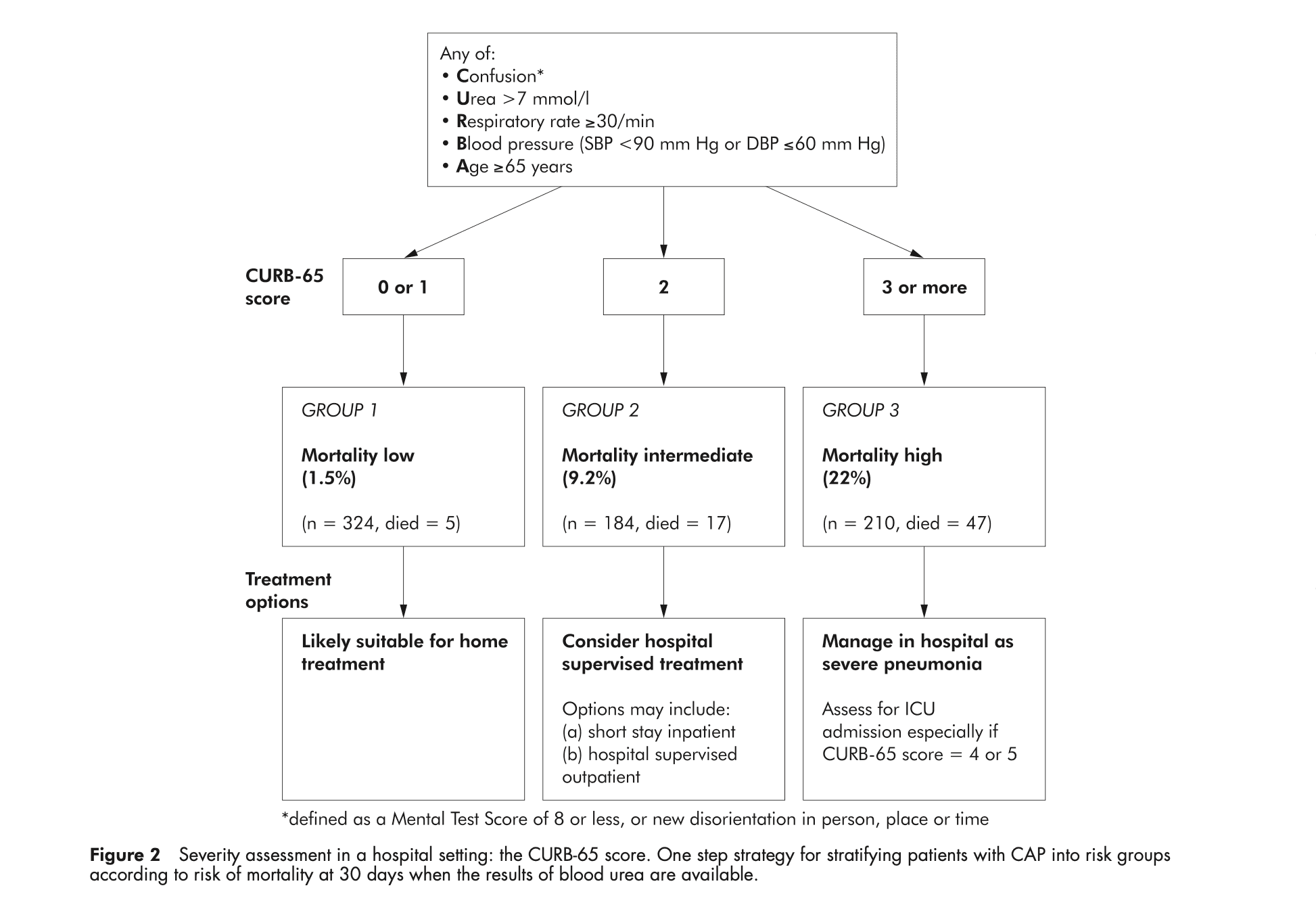
Now think of Pneumonia. A classic infection known for long hospital stays, patient distress, and death.
You’ve got CAP. You’ve got HAP. In that, you got VAP and NV-HAP.
Say all of those in a freestyle, and you’ve got a Pneumo Rap.
Now, you might be wondering, ‘What’s the link between toothbrushes and Pneumonia?’
Well, a toothbrush may actually prevent more than just plaque; it may also prevent NV-HAP. You’re probably starting to get suspicious. Did a dentist sneak his way into a doctor's newsletter? But, fear not, this is not just propaganda from Big Dental.
This link was studied in the HAPPEN trial. Published in The Lancet Infectious Diseases, this multicentre stepped‑wedge cluster RCT ran across nine medical and stroke wards in three Australian hospitals. It included 8,870 adults who stayed in hospital for at least 48 hours.
How did they test it?
- All the wards started on usual care, i.e. just brushing like always.
- Every 3 months, some wards switched to the HAPPEN bundle:
- Toothbrush + fluoride/sodium bicarb toothpaste in a bag
- Research nurses helped with lip care + cleaning teeth/dentures/tongue
- Regular patient & staff education + Monthly Audits of oral care
- By 12 months, everyone was on the bundle, and no one was left behind. How sweet.
What was the primary outcome?
- Incidence of NV‑HAP >48 hours after ward admission, using strict ECDC criteria
You’re probably wondering: would 9 out of 10 Resp Consultants recommend this intervention? Apparently so:
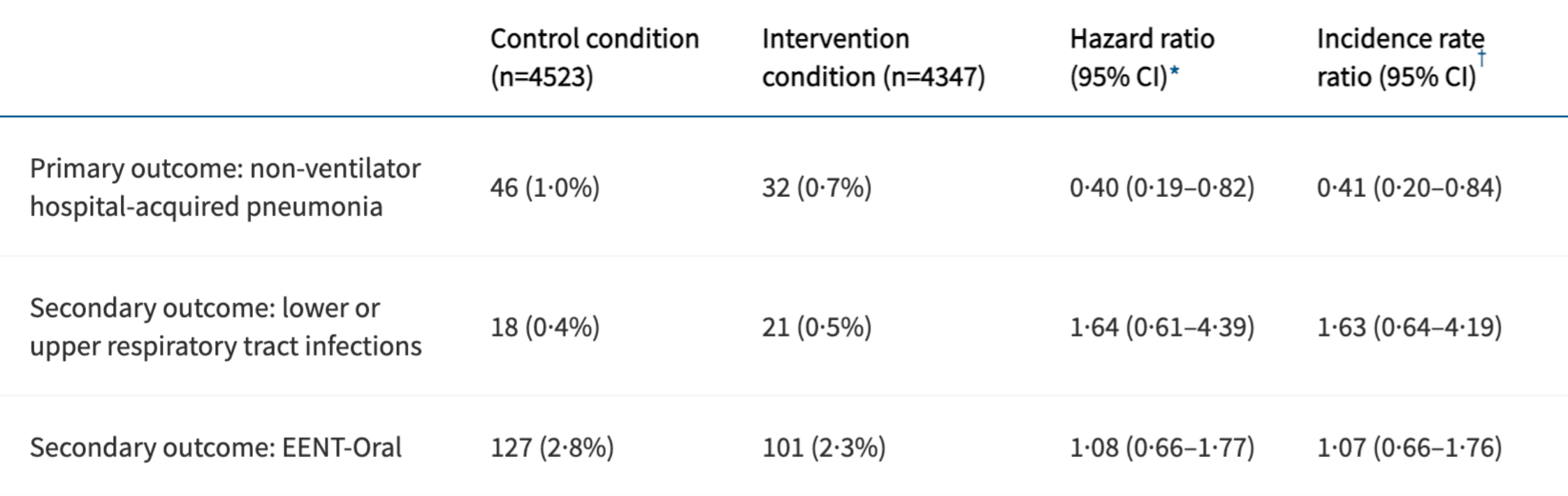
- NV‑HAP dropped from 1.0% in usual care to 0.7% with the HAPPEN bundle.
- That’s about a 60% relative reduction in NV‑HAP! (cumulative hazard ratio 0.40, 95% CI 0.19–0.82).
- Documented oral care completion jumped from 15.9% to 61.9% after the bundle. (The people yearn for the brush)
But here’s some info from that pesky last consultant who doesn’t agree:
- Only nine wards across three hospitals → a strong start, but not a large, diverse sample.
- The control group had more antibiotic use, which wasn’t adjusted for.
- Oral care was measured from documentation, not direct observation.
- The whole thing was run with dedicated research nurses. Not exactly standard staffing on a stretched medical ward.
The £1 toothbrush may be humble, but it definitely ain’t weak. Yes, drugs like Tazocin are more expensive heavy-hitters, but stopping Pneumo from getting into the ring is what we want.
Make sure to start brushing up on your toothbrush brands. Pretty soon, you could be deciding whether to prescribe soft bristle brushes or hard bristle brushes. And if you’re a consultant, you might have the honour of prescribing the legendary electric toothbrush.
If you enjoyed reading this and want to get smarter on the latest medical research Join The Handover